A fun-filled field trip for 7th graders! Students spend half the day kayaking, and the other half in dockside activities that offer hands-on, science-based learning.
Kids in Kayaks
About the Program
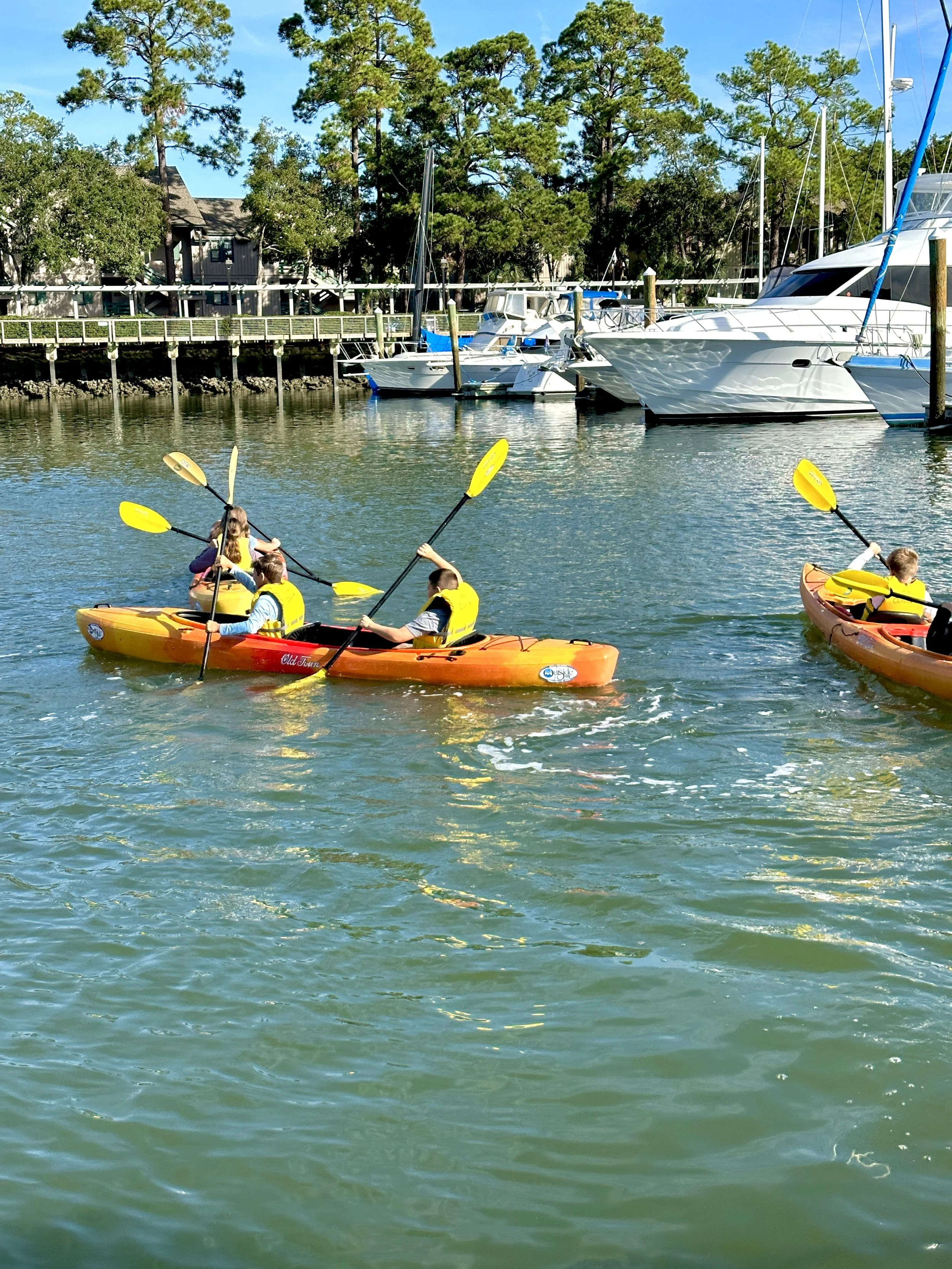
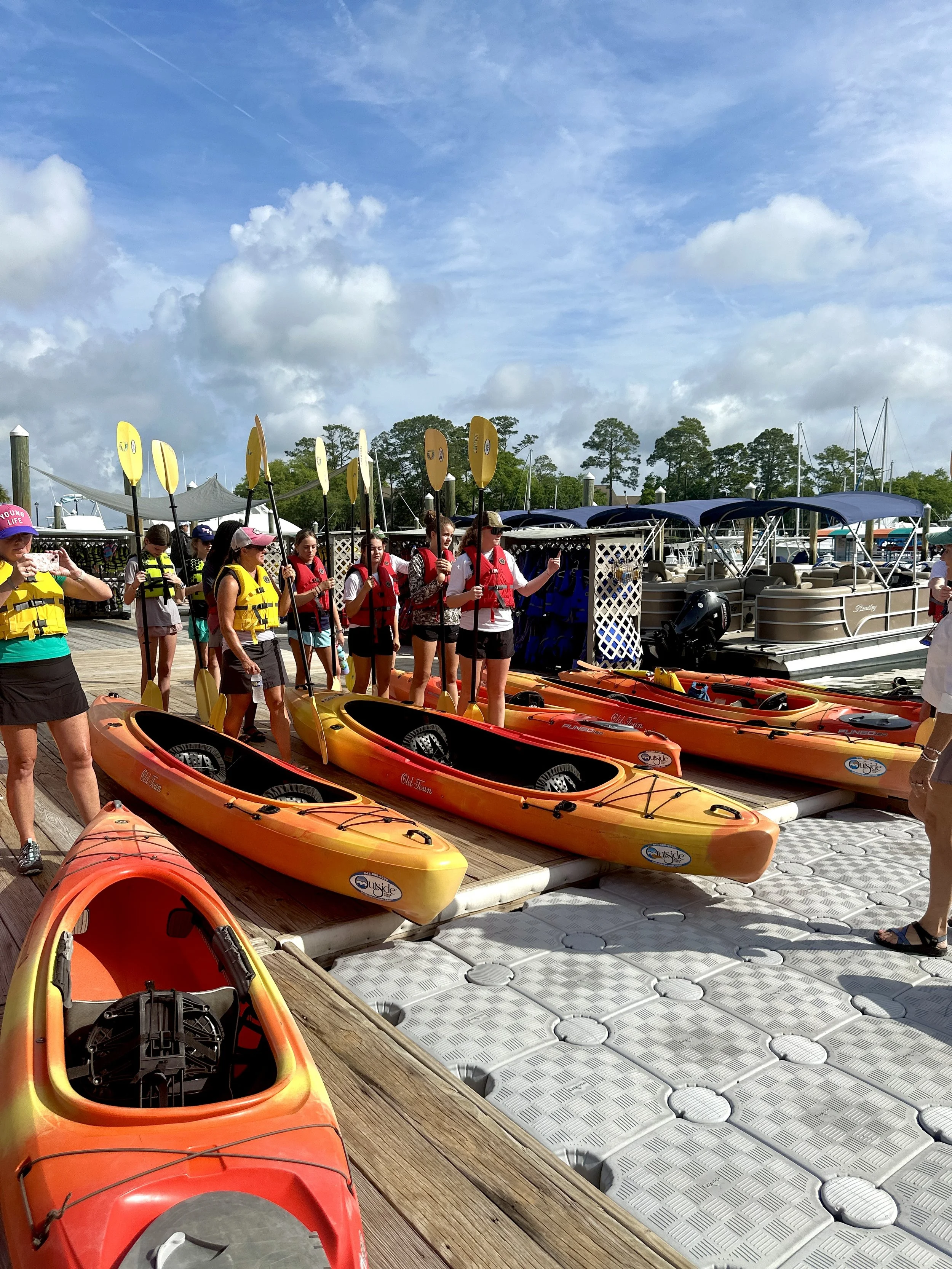
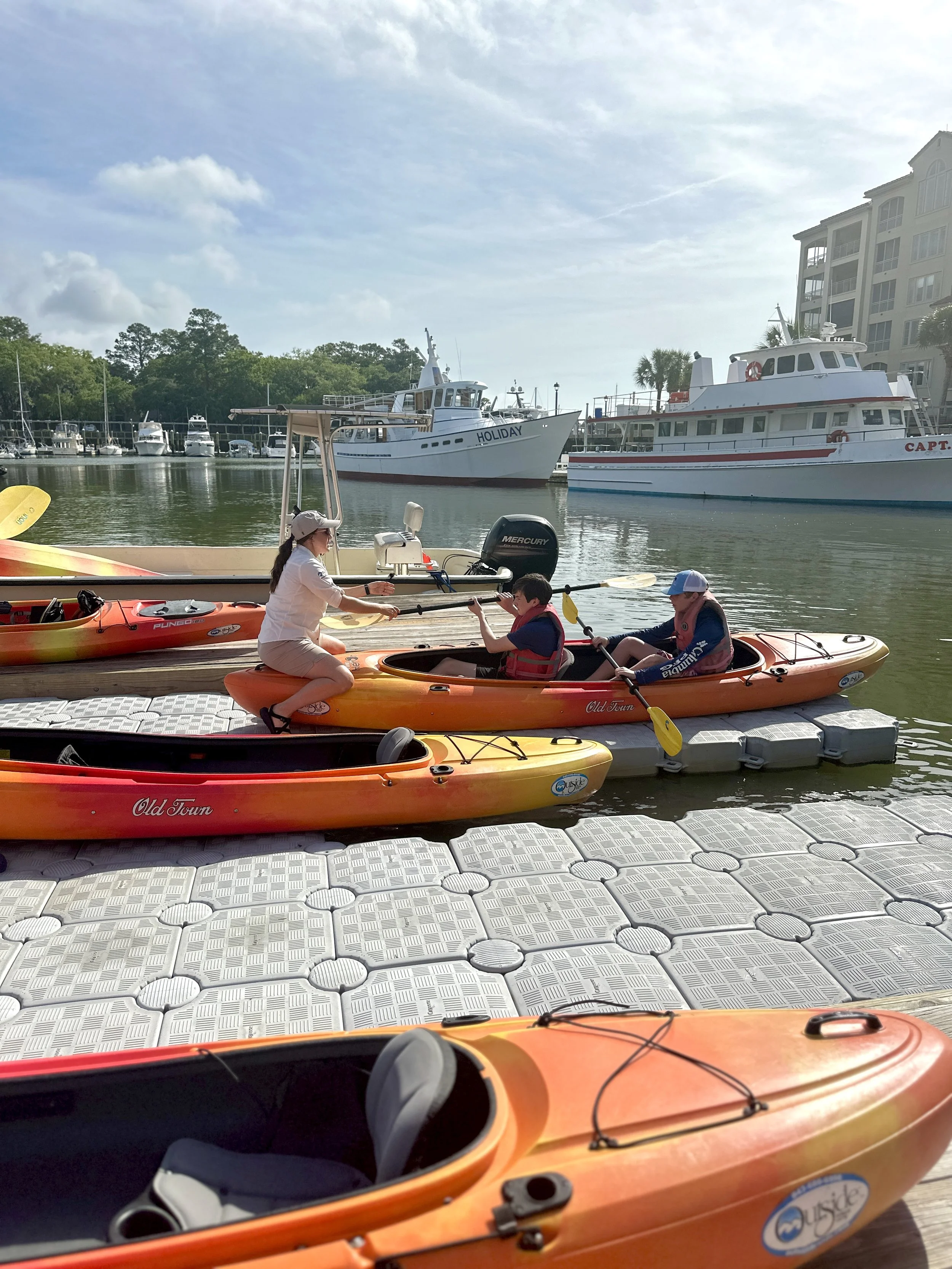
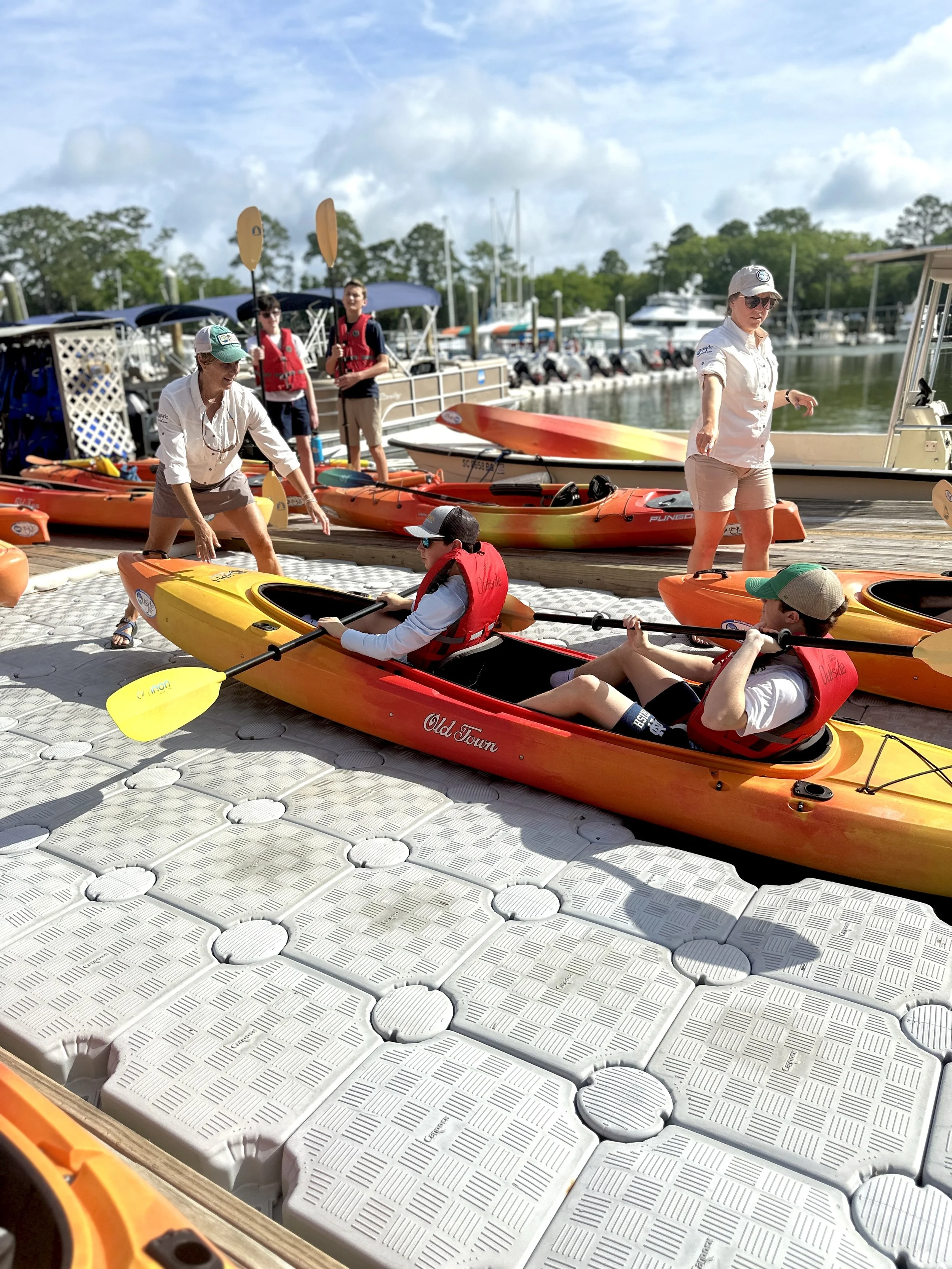
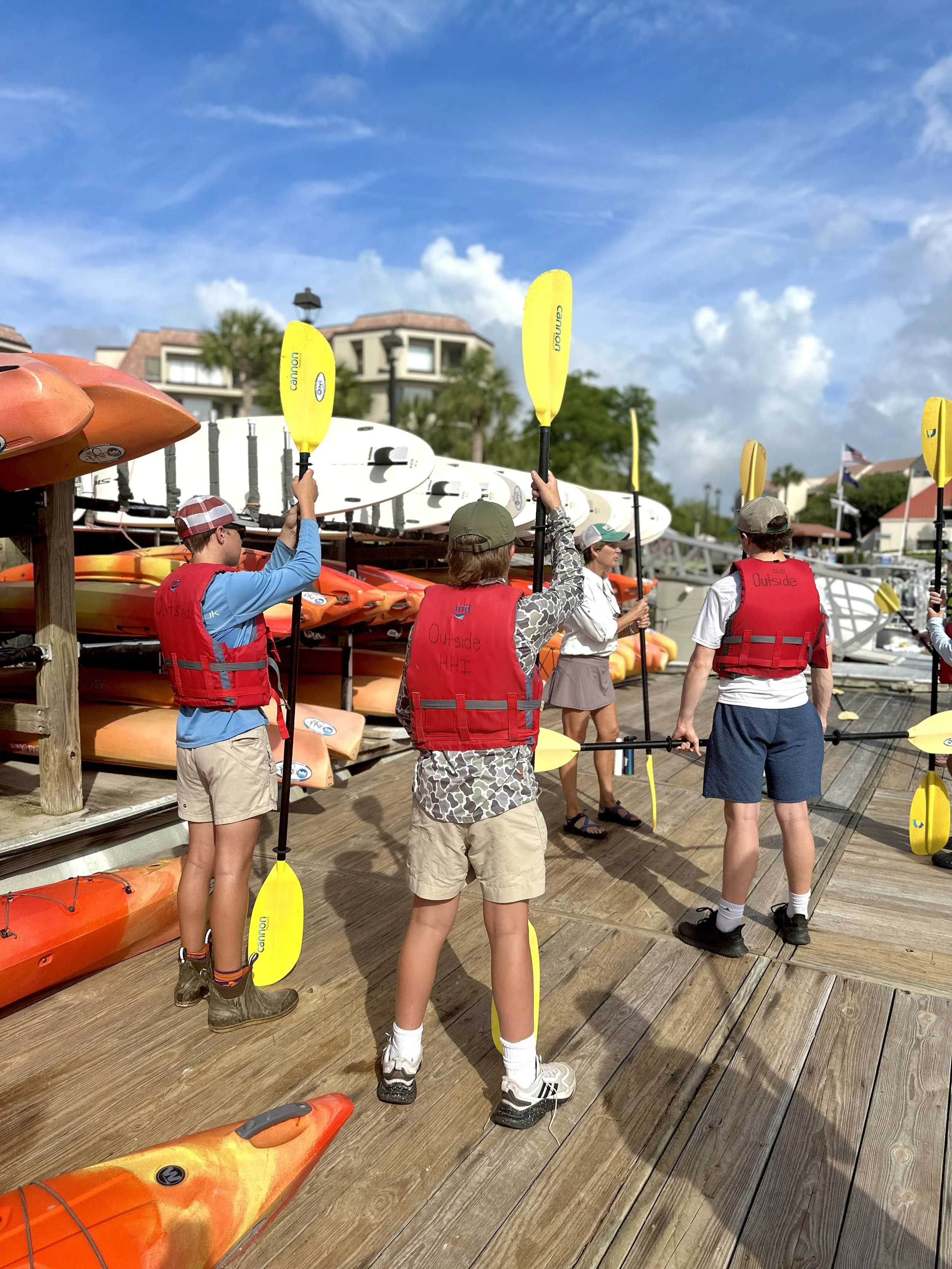
The Kids in Kayaks program ensures that every 7th grade student in Beaufort County has the opportunity to get on the water and explore the local salt marshes as part of a regular school day. Together teachers and guides deliver a facilitated, nature-immersion experience aligned with state 7th grade environmental science learning outcomes. For many students, it is their first time on the water or their first time in a kayak, and an unforgettable, life-changing day.
-
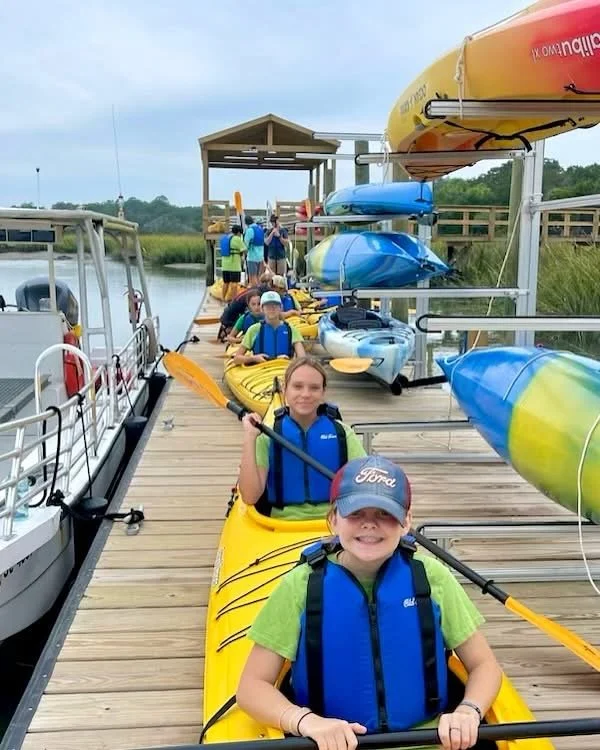
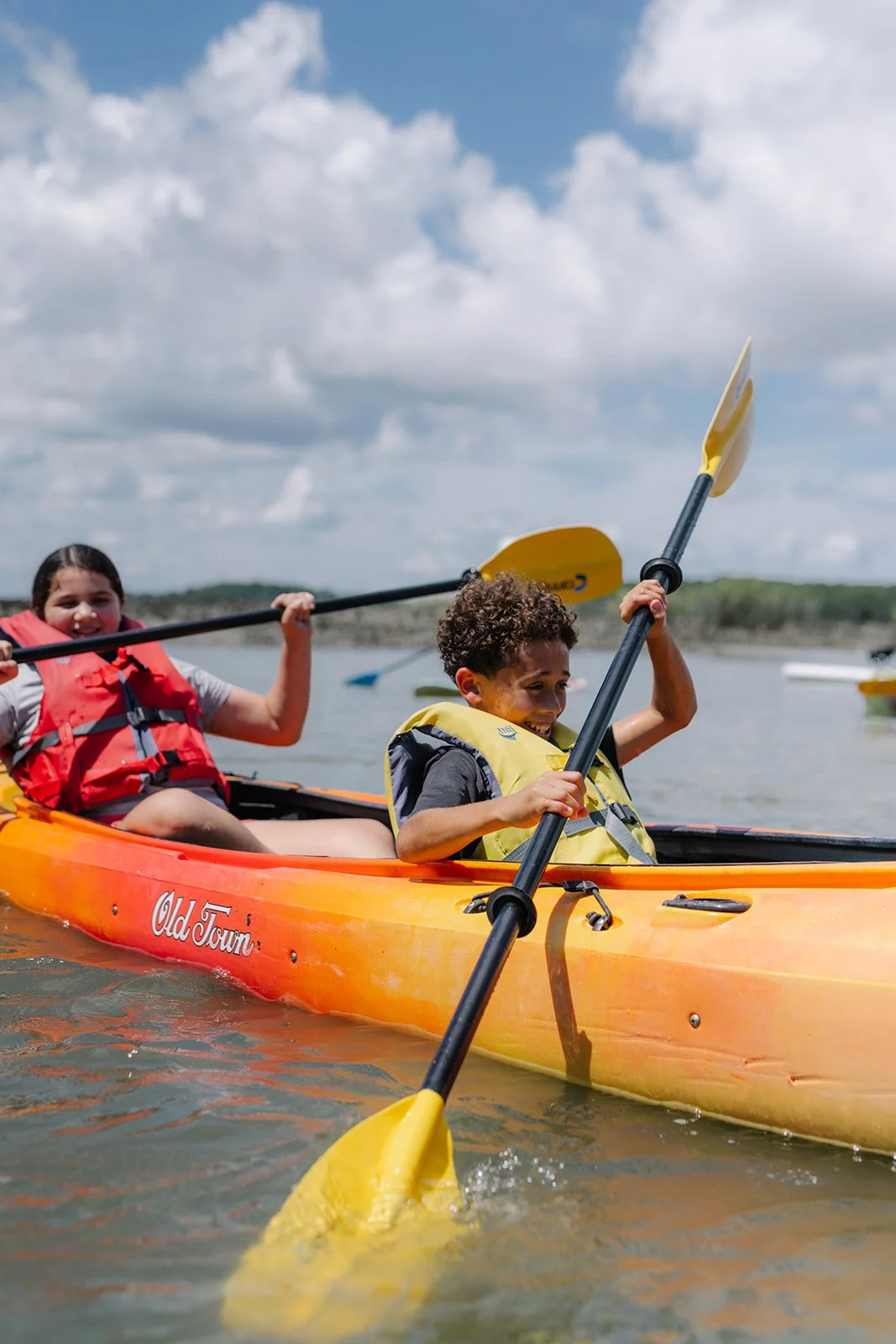
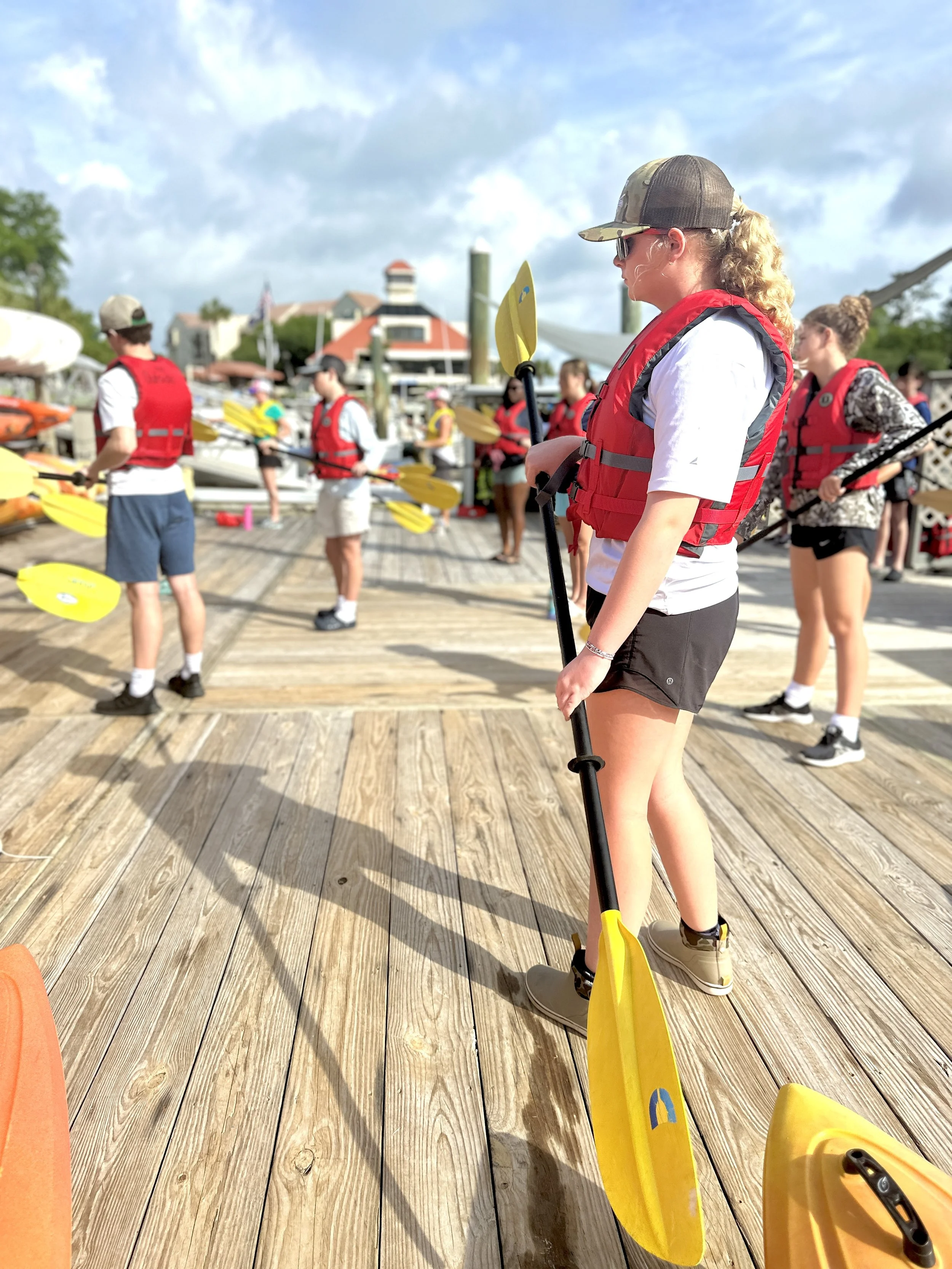
Kayak professionals trained in interpretive naturalism lead the tours. Using safe, stable tandem kayaks, the students kayak through the salt marsh learning about this important ecosystem first hand. Almost half of the students have never put on a life jacket, held a paddle, or kayaked the local salt marshes.
-
The Kids in Kayaks program blends field trip excitement, curiosity, and an immersive experience to learn about the ecology of the salt marsh in the salt marsh. Many of the ecological concepts introduced in the classroom can be abstract for students. This multi-sensory outdoor experience helps bring those concepts to life through direct, hands-on learning. All topics covered both on the water and during dockside activities align with South Carolina 7th grade environmental science learning objectives for the salt marsh ecosystem.
-
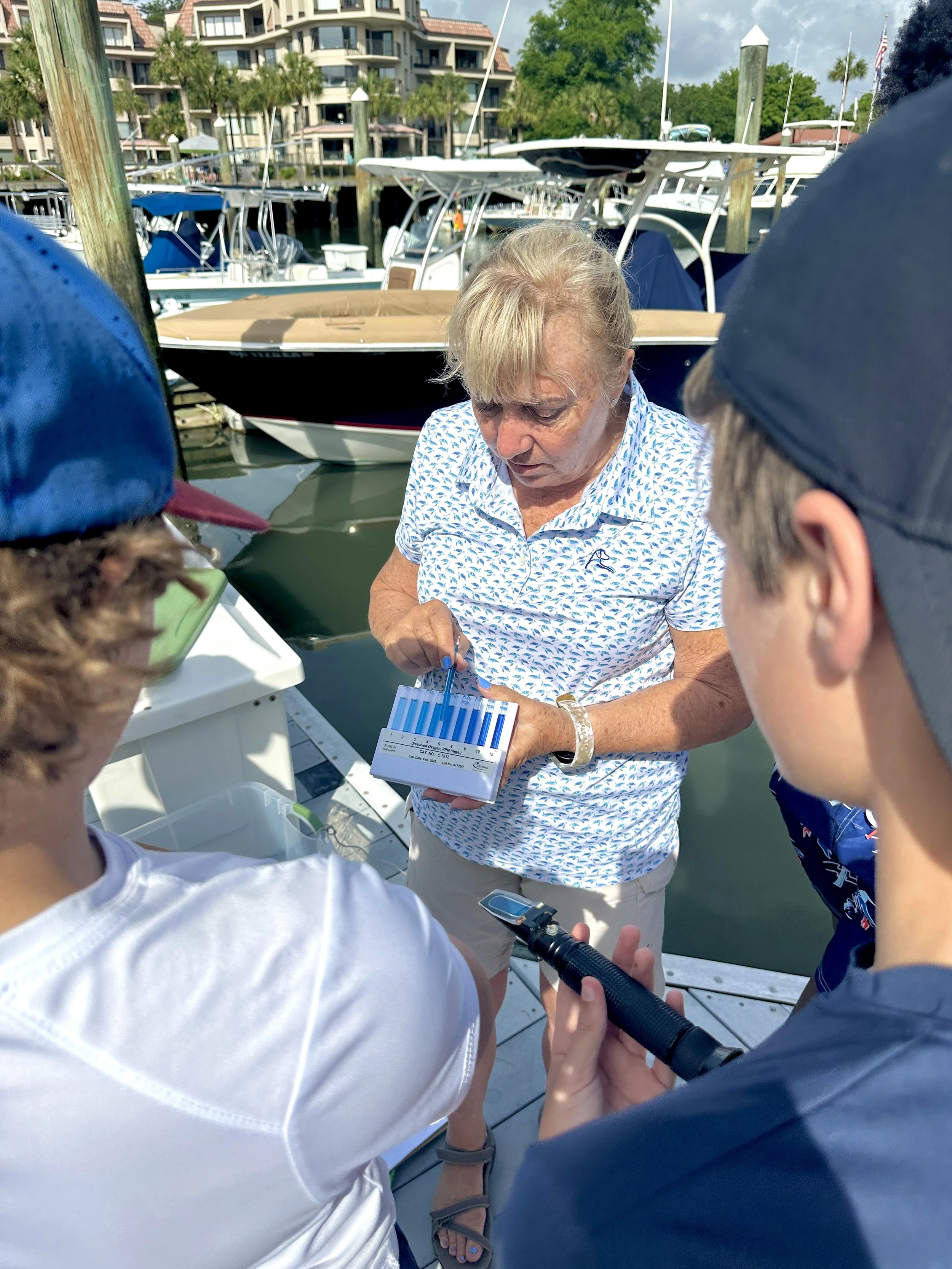
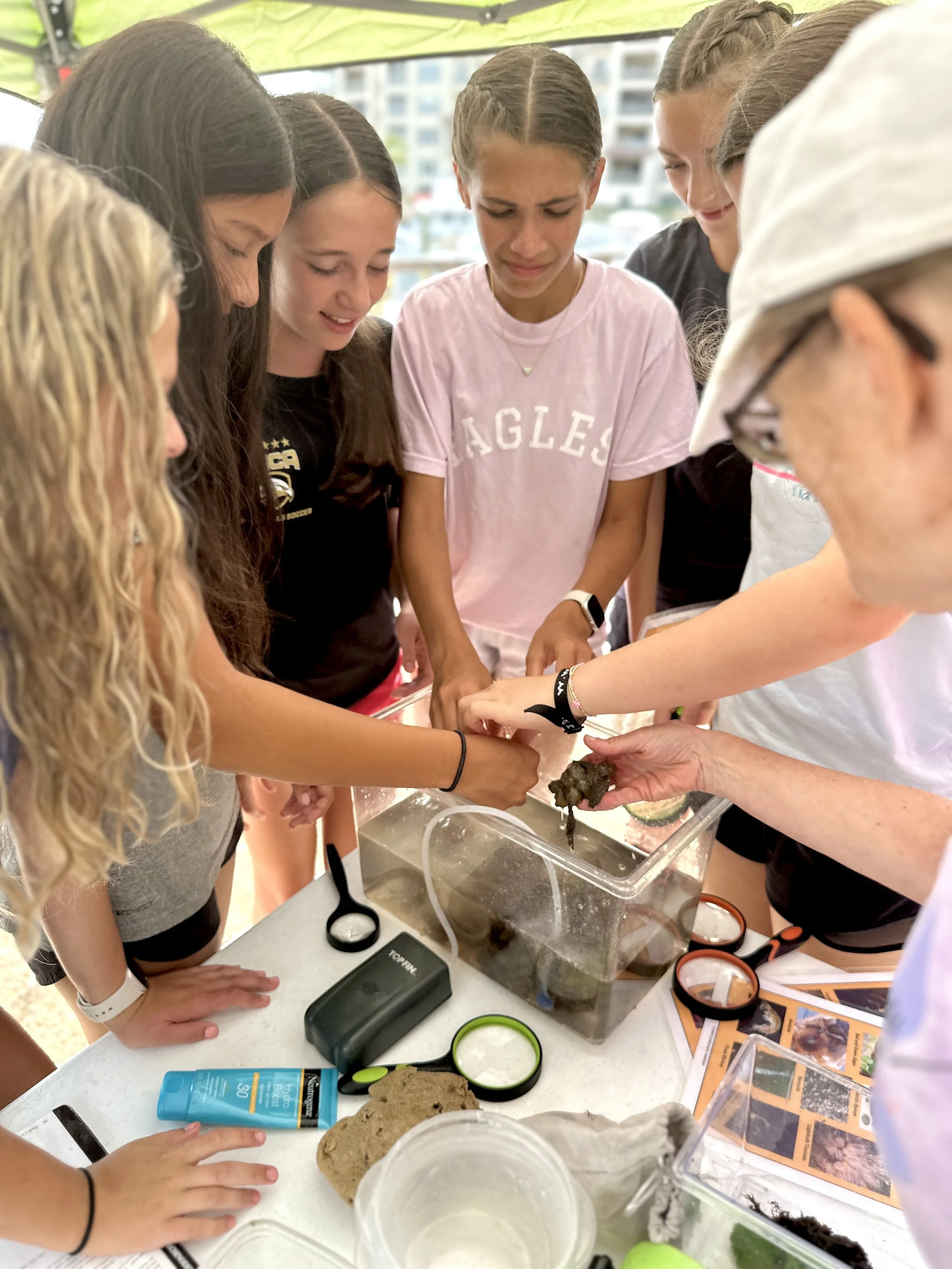
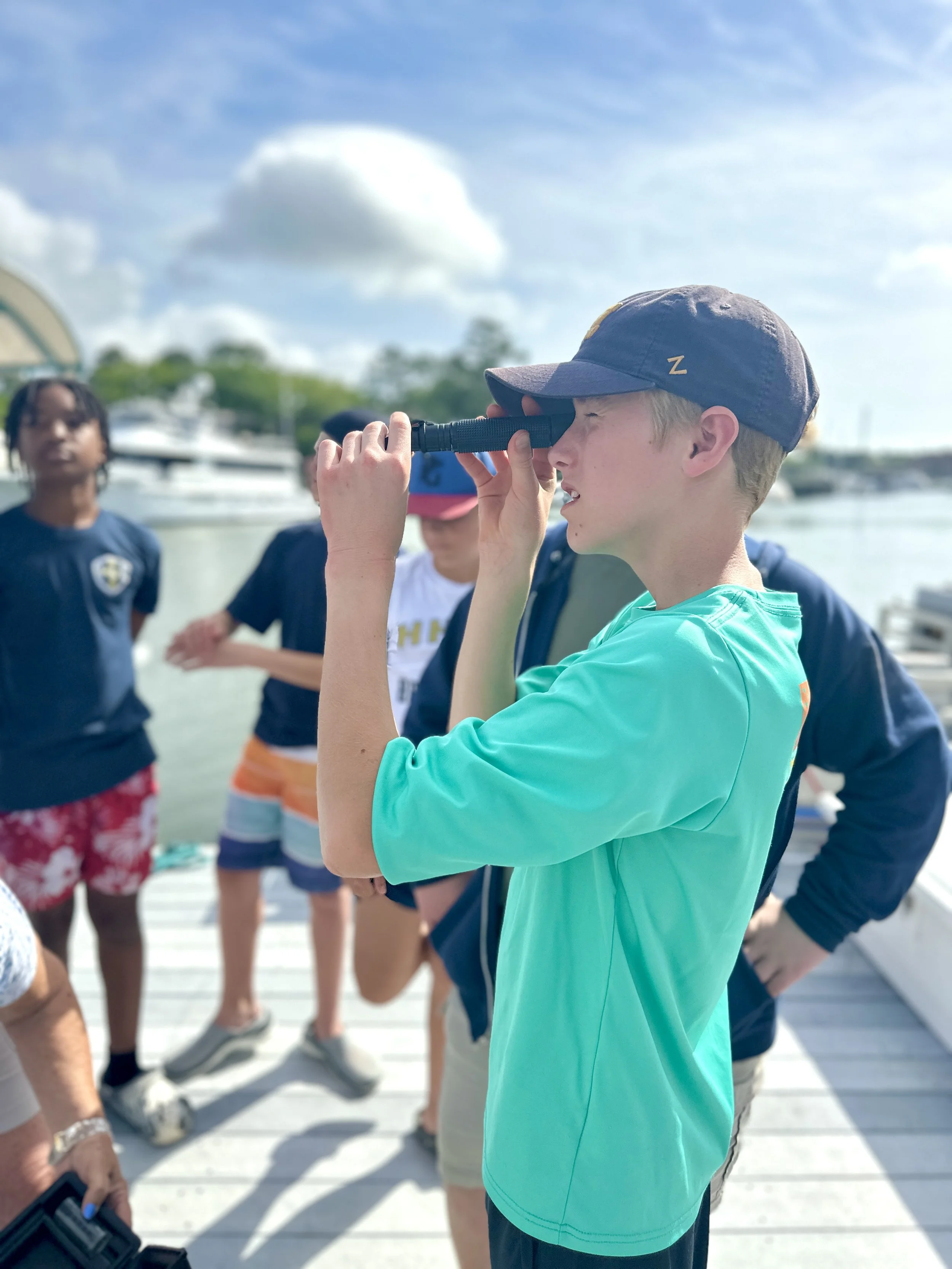
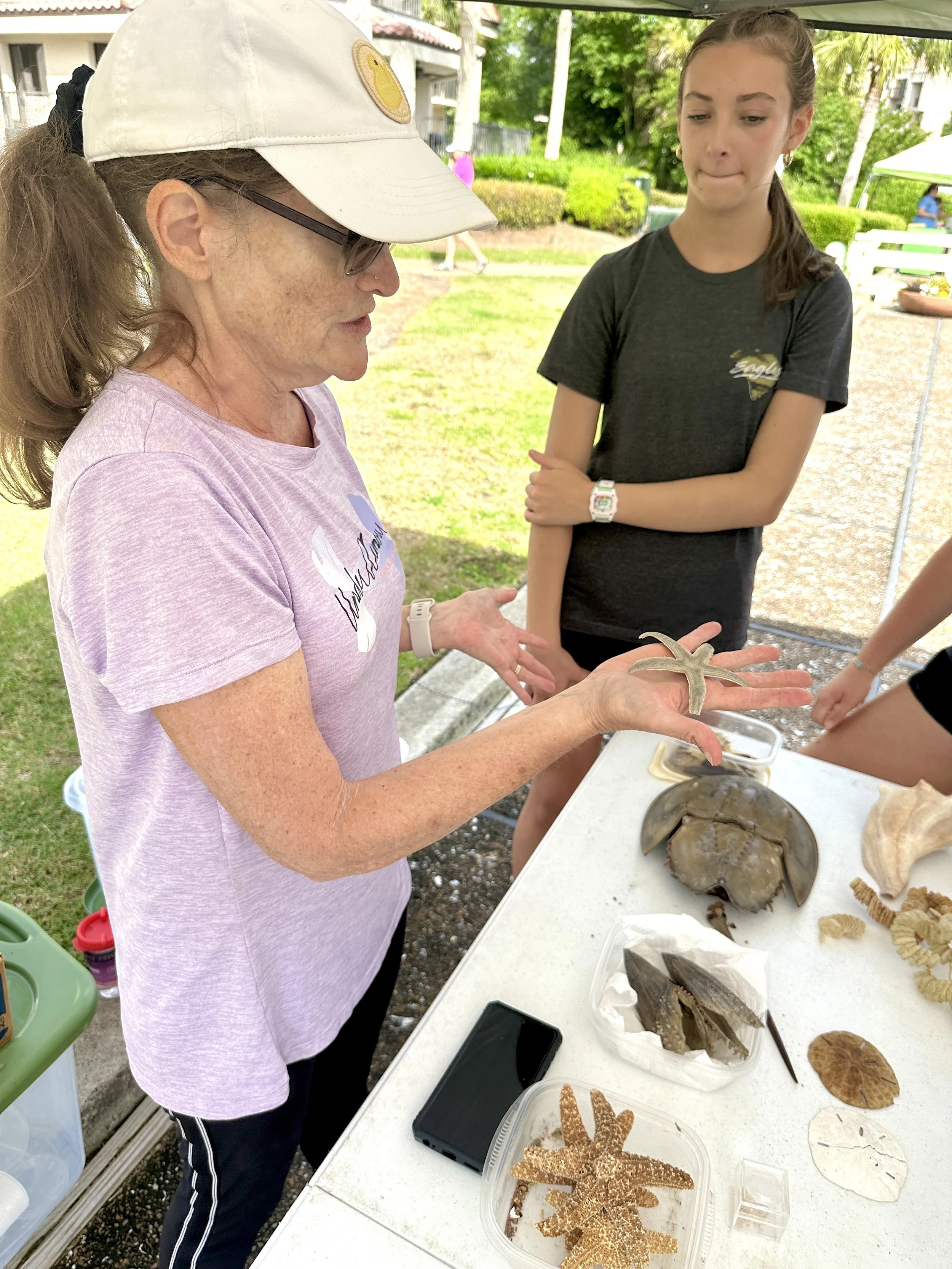
These interactive stations are designed for “hands on” learning about concepts introduced in the classroom including phytoplankton and the salt marsh food web, identification and classification of salt marsh organisms, biomagnification, stormwater runoff concerns, coastal bird and water fowl identification, and water quality testing.
-
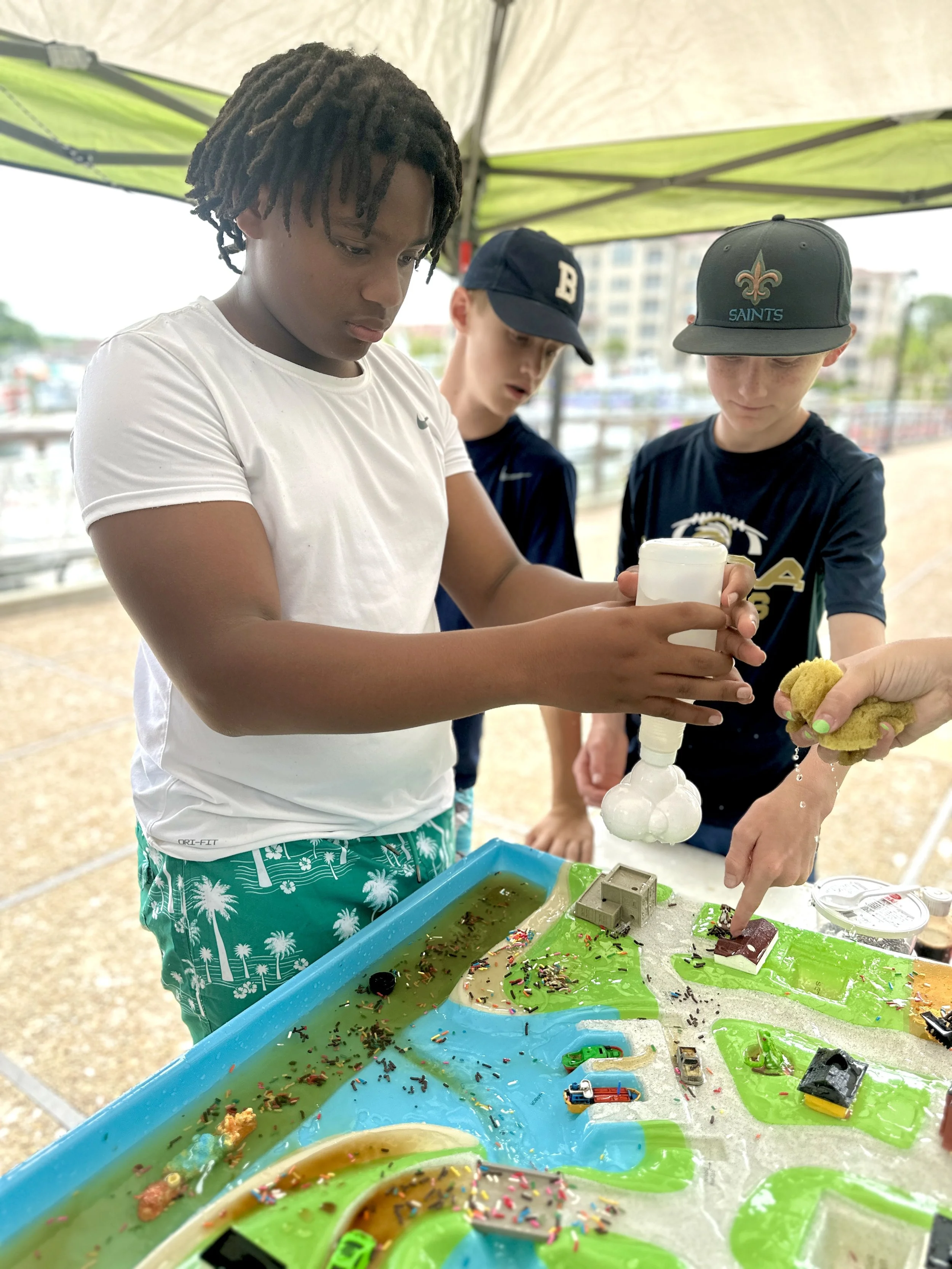
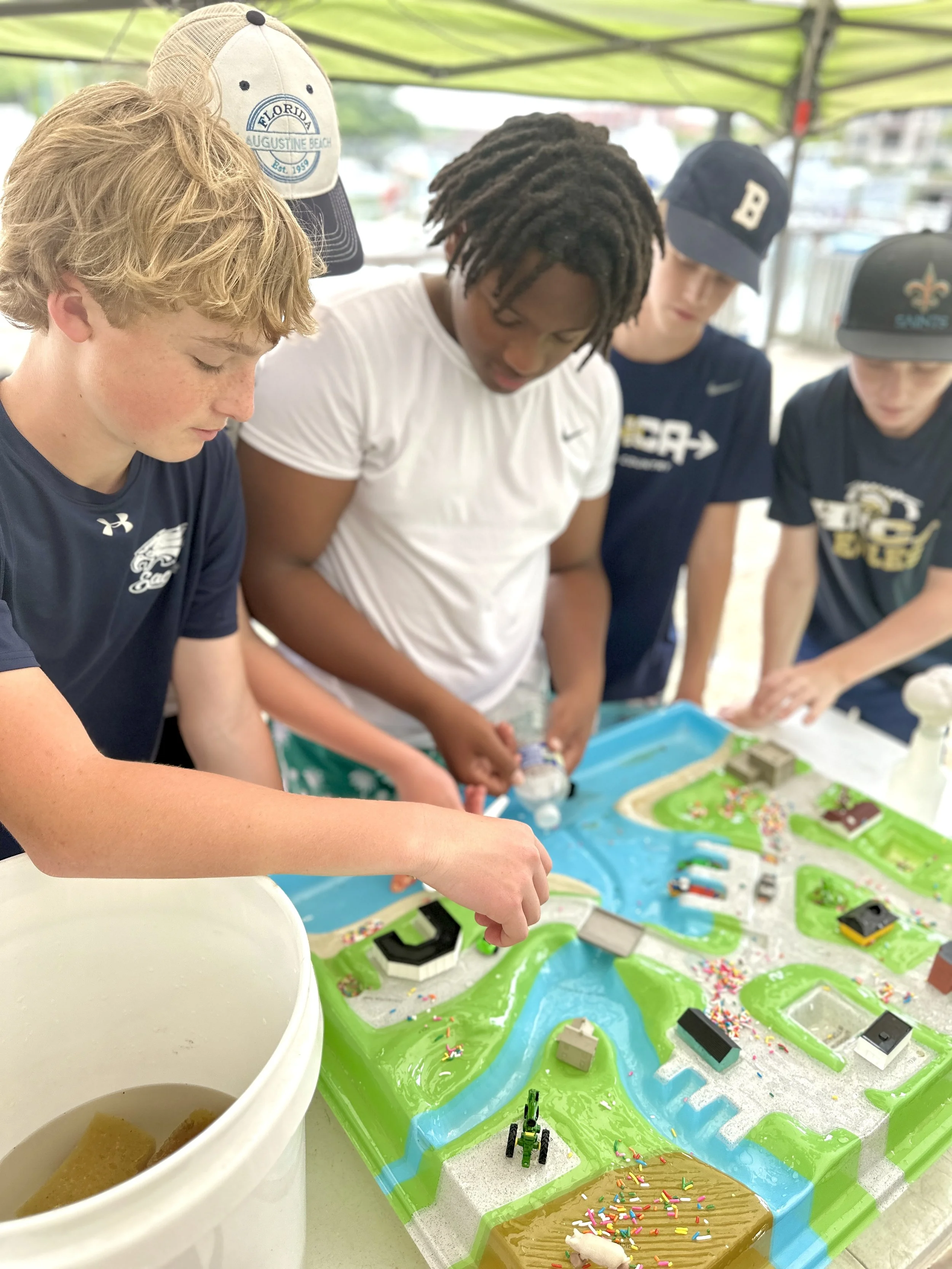
Using an Enviroscape watershed model, students are guided by stormwater professionals to explore runoff, pervious and non-pervious materials, and point and non-point sources of pollution. Students create their own “pollution,” simulate rainfall, and track how the pollutant moves through the watershed. Fascinating!
-
The Lowcountry is home to a rich diversity of bird life. Through Kids in Kayaks, students use binoculars to observe and identify species and learn about the role of birds in the salt marsh ecosystem.
-
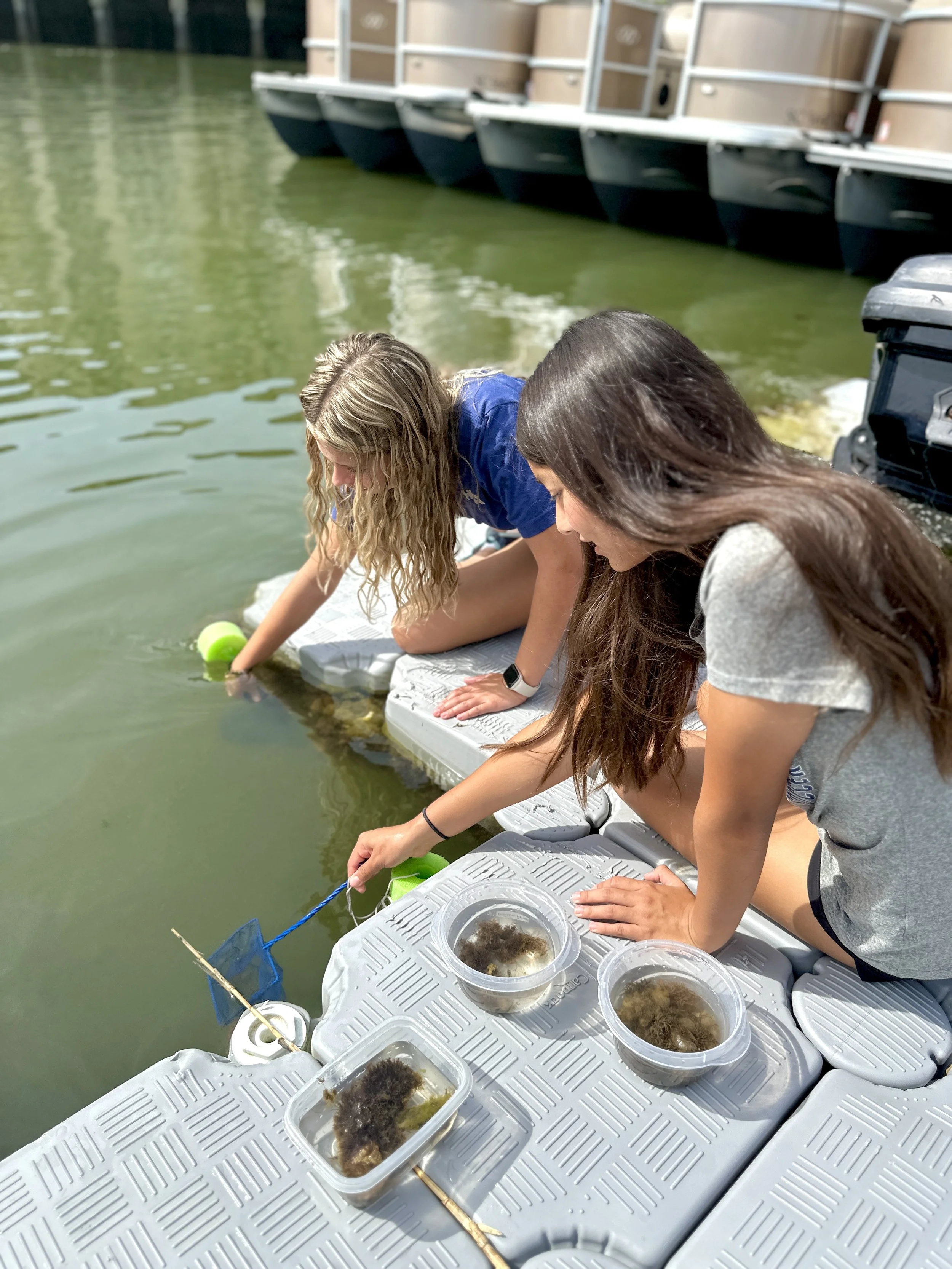
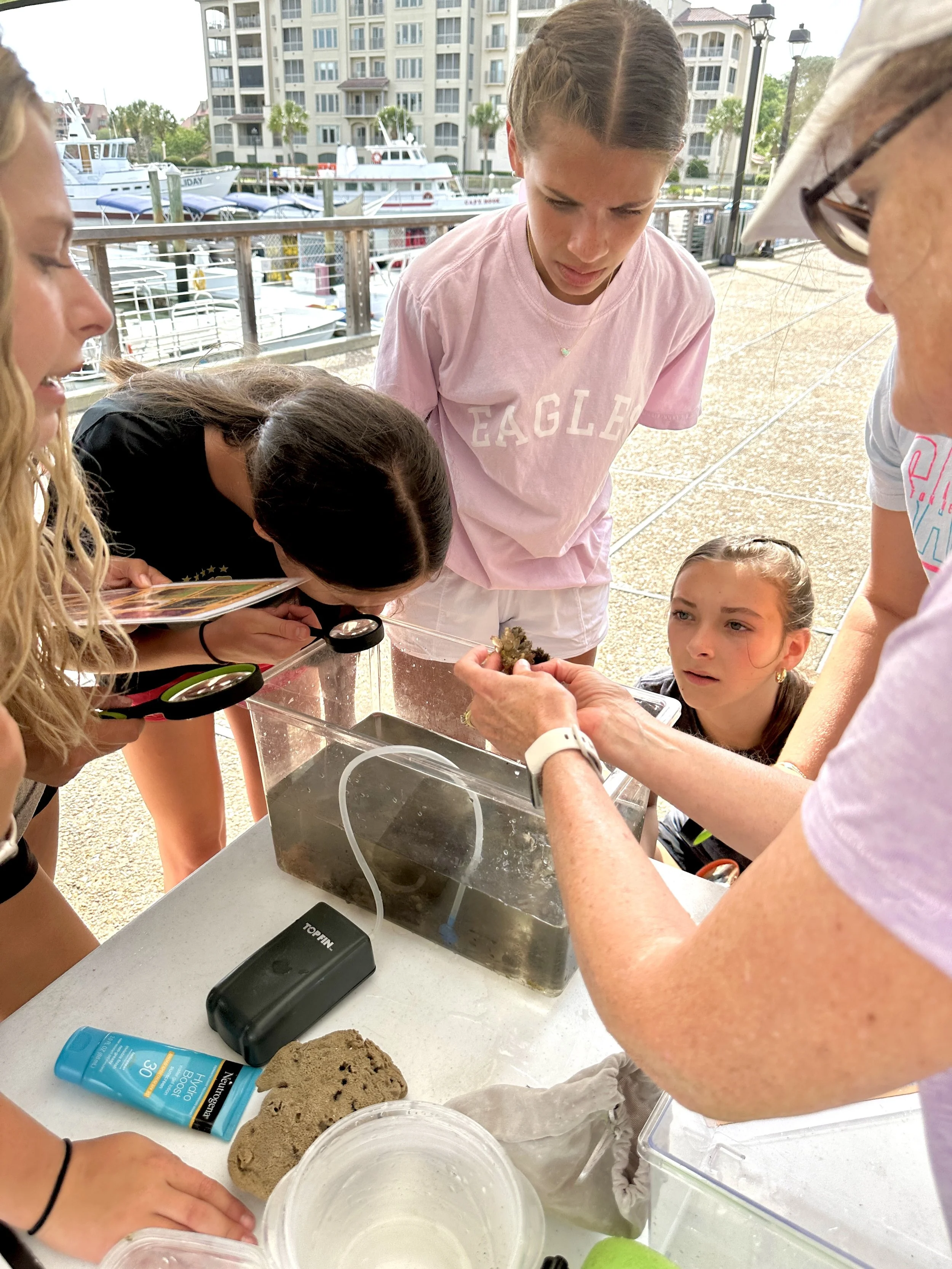
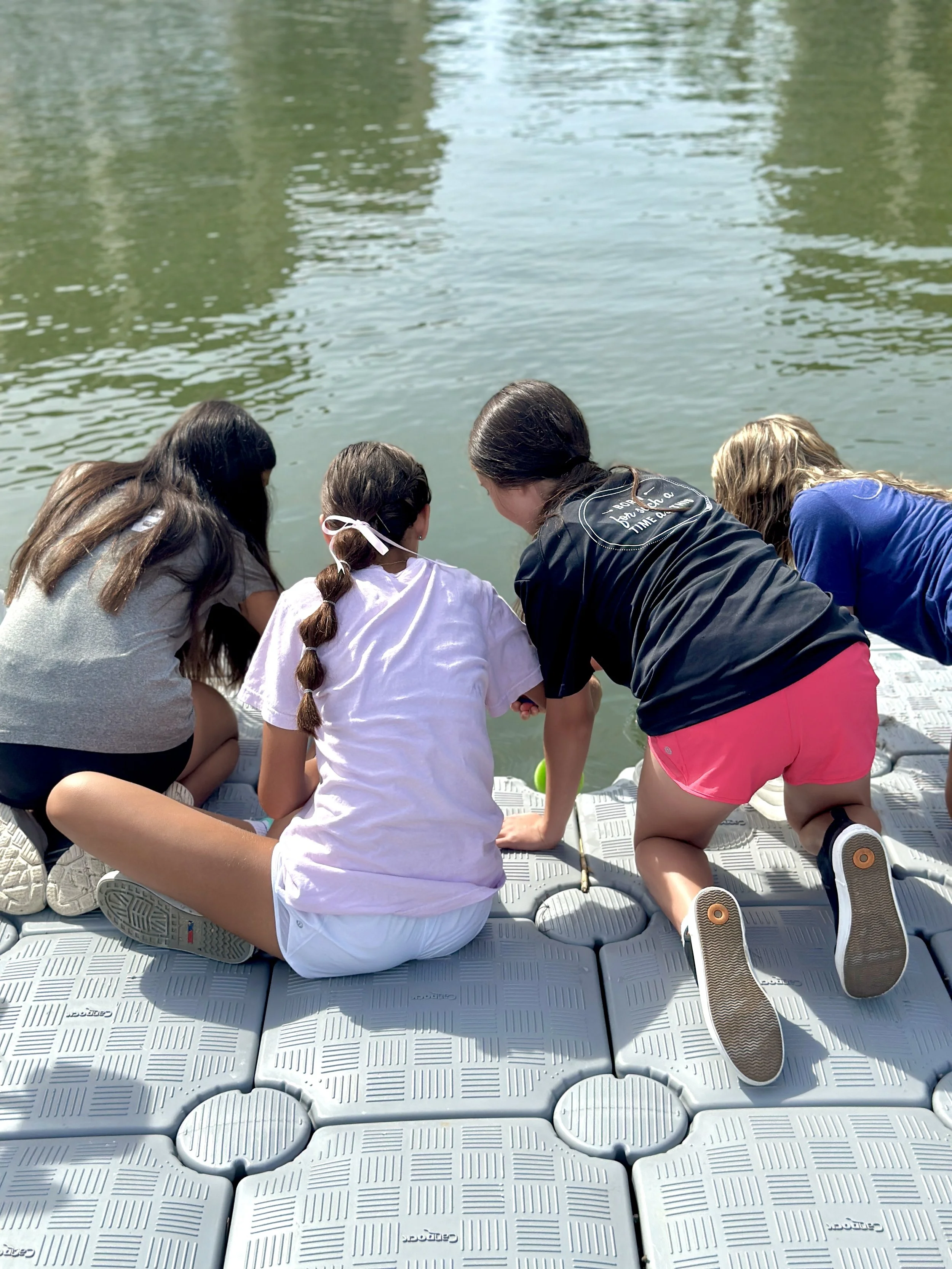
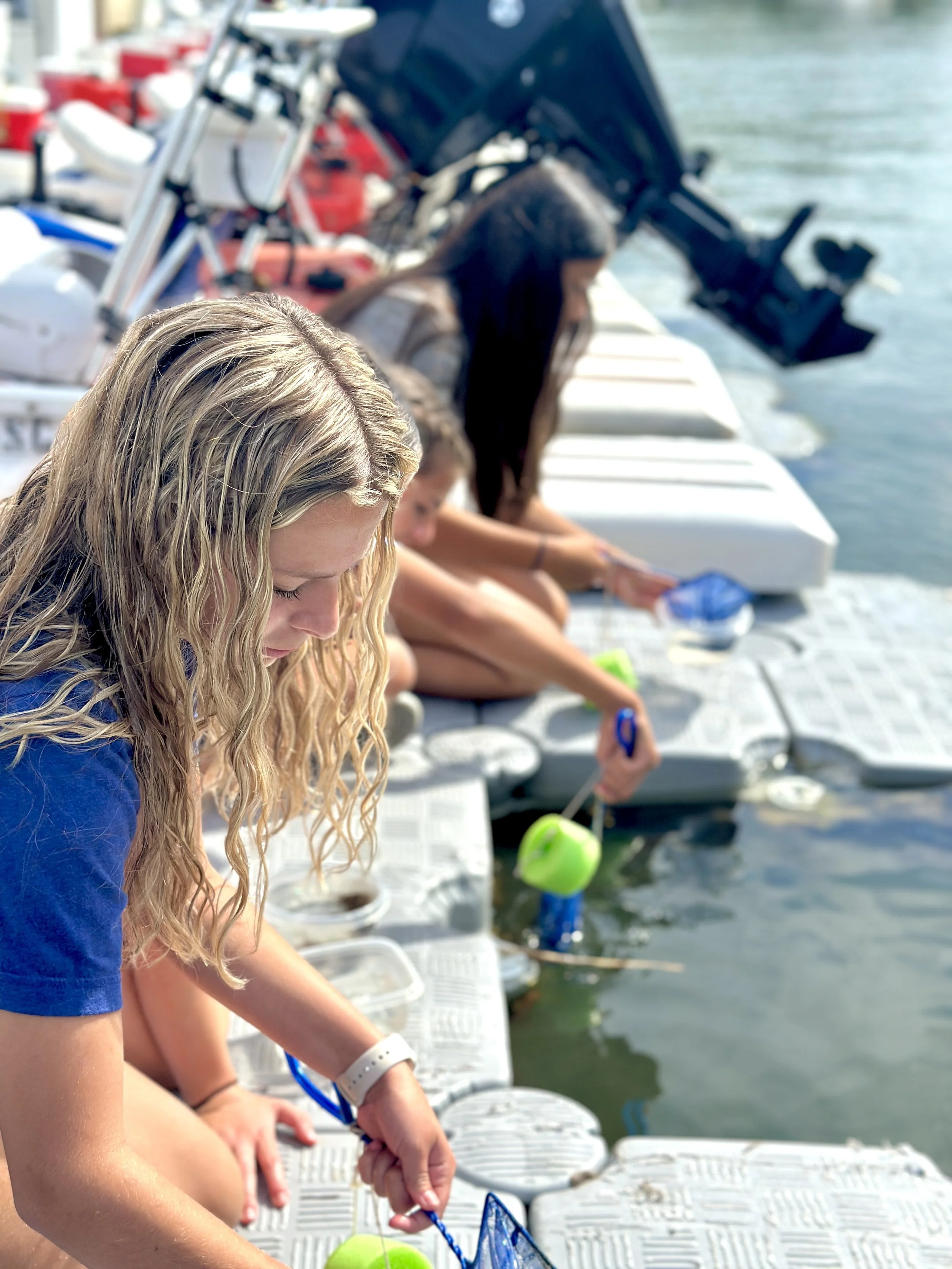
Under the direct supervision of trained naturalists, students gather organisms from underneath the floating docks and then examine and discuss their findings. Using nets, the students can gather and analyze lots of interesting salt marsh organisms!
-
ids get their hands dirty, handling crabs, marsh grass, shells, and other flora and fauna of the salt marsh. Master Naturalists guide discovery and share insights about the species they encounter.
Why It Matters
-
Students learn best when they're curious, excited, involved, challenged, and having fun. Kids in Kayaks provides of this!
-
We engage local science teachers to sign their classes up for Kids in Kayaks and facilitate every step of the process of executing the field trip.
-
Professional kayak guides, assisted by experienced volunteer kayakers, lead all on-the-water activities. Dockside stations are led by Lowcountry Master Naturalists and watershed professionals, with support from retired educators, Audubon members, and trained volunteers.
-
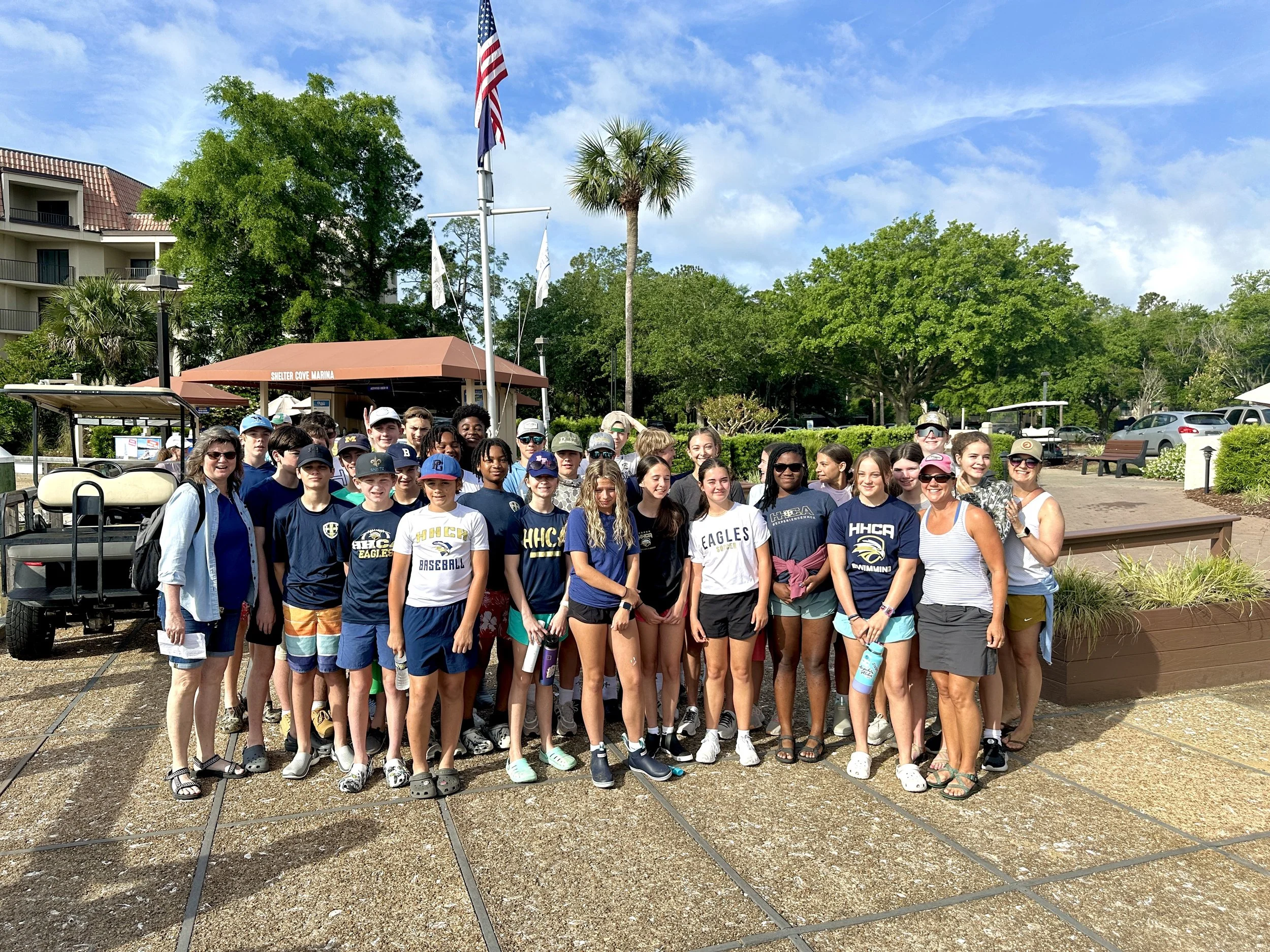
Every student has the opportunity to participate in the program in the salt marsh/tidal river area closest to where he or she lives! We have three locations: St Helena Island, Palmetto Bluff Resort on the May River, and the Broad Creek from Shelter Cove Marina.
-
Partnering with our local Boys and Girls Club, The Outside Foundation sponsors a "Learn to Paddle" kayaking and paddle boarding program, free of charge to all Club members.
-
The Outside Foundation ensures that cost is never a barrier to participation. Through an ongoing fund made possible by generous donors, we cover field trip fees for students who would otherwise be unable to participate.
“This is an absolutely wonderful experience for our students, many of whom have lived here their entire lives but have never been out on the water. The students repeatedly ask if we can do this every day! The students were attentive to the instruction taking place and more interested in the content than I have ever seen in the classroom setting. Since returning, the students will bring up topics and examples of what they learned on the trip. One key element in this though is the continued availability of scholarships, without which many of our students would not be able to participate.”
— 7th Grade Teacher, Hilton Head Island Middle School
Thank You to Our Sponsors